5 automation trends shaping the future of waste facilities
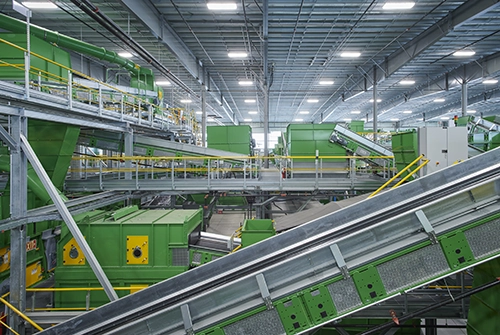
1. How is automated technology making material recovery facilities (MRFs) more efficient?
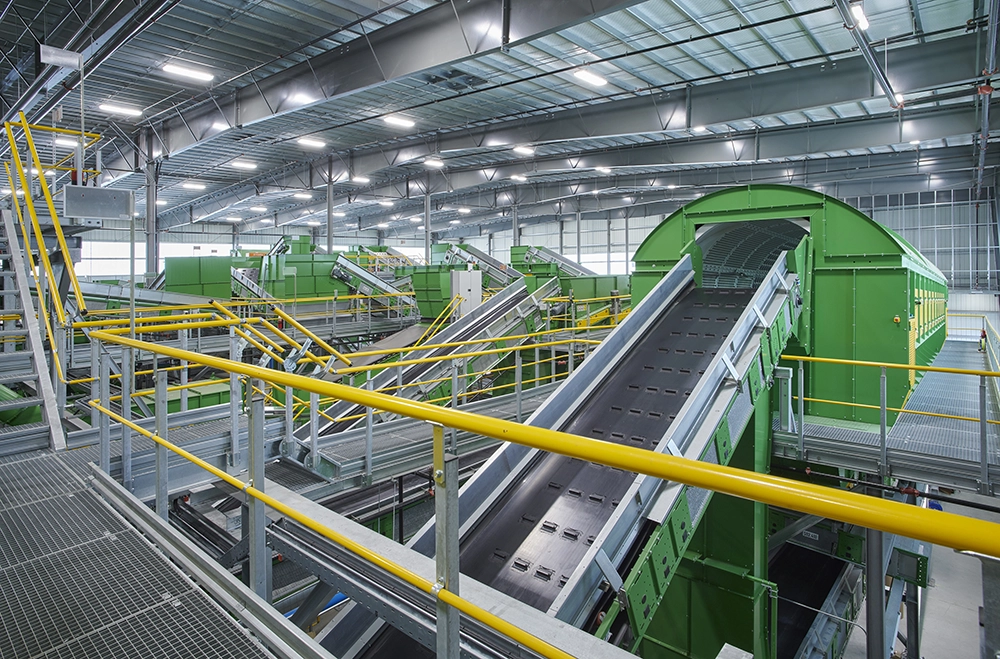
Newer front-end systems are becoming more automated. Whether they incorporate a trommel, ballistic separator or an augur screen to do an initial cut, these automated systems are often able to do a better initial sort so the manual sorters are able to be more effective.
Another area for improving sort system efficiency is increasing use of optical sorters that provide more opportunities to sort materials further down the line. Operators are often taking the residual stream coming off the container line and looping them back through for a second go for increased accuracy, to improve the output streams and to reduce manual sorting.
2. How are operators using artificial intelligence (AI) to improve sortation?
Where AI is starting to be increasingly valuable to operators is acting as the brain for automated optical sorters. AI operates on probability, so you can more easily dial it in to what you need.
When AI looks at an item, it says, there’s a 60 percent chance this is something we want, or maybe it’s a 90 percent chance. Taking into account the parameters of your end market buyer, you can turn that probability level up or down. If a vendor pays you more for a better sort, you could turn up that probability and make sure you’re getting the cleanest sort possible. But for a vendor who isn’t as picky, you could turn down the probability and get more volume.

Simplifying Clients' Lives One Project at a Time.