Transfer Station Design Guidelines to Improve Facility Performance
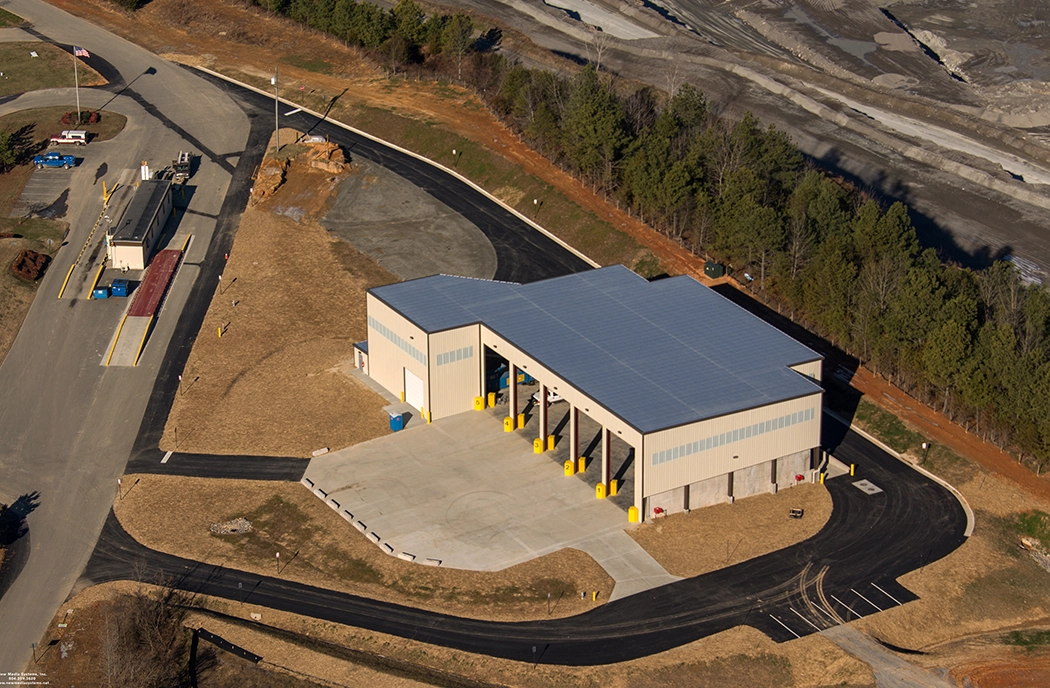
When planning a new transfer station, operations should be a primary driver in the design process. It can help to look at the project as a series of operational considerations that the transfer station design is meant to address.
This article focuses on several key areas of transfer station performance and how operations can drive and shape design. These areas include site layout, logistics and facility design.
Site layout
When laying out a transfer station, several operational considerations should be kept in mind. This can begin with how the facility’s main elements are placed and oriented on a site plan. Ideally, the site entrance is placed to maximize queuing at the entry and exit.
It’s important to analyze the anticipated inbound material stream to identify peak times and ensure the design can accommodate it without backing up vehicles off the site. If the analysis indicates excessive queuing at peak times, it likely will need an additional inbound scale. Another consideration is whether that additional scale can be served by a driver’s access terminal or if it requires a dedicated scale house. Many operations have enough internal or repeat customers that can be set up with tare weights, making a scale served with a driver’s access terminal a viable approach.
Another factor to keep in mind at the scales is how the scale operator interacts with the transfer station customers. If the scale operator directly speaks to the drivers, the scales must be staggered so the operator’s windows align. This consideration drives the site design and layout. After the scaling, it’s time to plan how the vehicles transit the site.
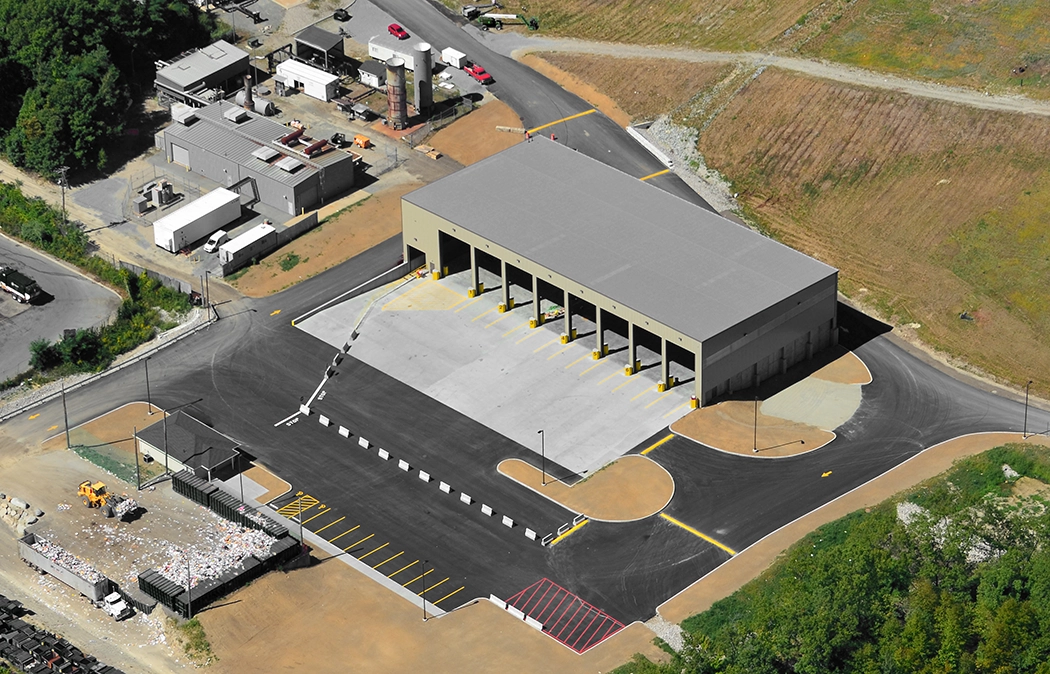
Ideally, the primary tipping area should be close to or visible from the scales to simplify wayfinding on the site. As vehicles approach the tipping area, work to provide a traffic layout that allows them to access the tip without crossing the outbound traffic lanes or other on-site vehicles. A good way to approach this is to consider the traffic layout as a continuous loop or concentric loops. It’s not always possible, but if the plan allows all traffic to travel in the same direction around the site, it will minimize or eliminate crossing traffic. Where crossing traffic is unavoidable, make the intersections intentional, marked and at right angles.
Operations should be a key driver of how the site’s various elements are situated and oriented. Many operations need to prioritize minimizing impacts on the surrounding community, so orienting the tipping doors away from primary viewsheds can be an important site-specific consideration. A similar consideration is prevailing winds and how they impact site operations and building orientation. This will vary seasonally and is geographically dependent, so special consideration should be made on a case-by-case basis.
Logistical considerations
There is no fixed logistics template for transfer stations. The specific operational needs of a facility should drive the design.
In the early planning stage, plan out the incoming tonnage by source. Try to understand the tonnage by how much is from repeat commercial customers, both internal and third-party volume. A further operational consideration is whether all the material is coming in on packer trucks or if there is significant volume coming in on walking floors, compactor boxes or other methods.
Try to project how much volume is coming in by small haulers, whether it’s resident self-haul or small commercial haulers with box trucks or trailers. Special attention should be paid to this material to confirm how much of it is anticipated and at what times. Depending on the specifics of the market, small-haul material can be lucrative, but it can pose challenges if it’s not planned for. Small haulers can take longer to unload material and need more space to tip relative to the volume of material they drop off at the site. The added strain placed on the tipping operation could drive the creation of a separate tipping area for small haulers depending on the volume of the material.
Another logistics-related operational consideration is how to plan for trucking and loading at the facility. The two primary approaches are direct load, where transfer semitrucks arrive at the site and proceed directly to the loading position, versus drop-and-hook, which has empty semitrucks arrive at the site and proceed to a parking area to drop an empty trailer and leave the site with an already filled trailer.
Direct loading often makes sense at sites with lower material volumes and only one yellow iron operator. This approach also can make sense at sites with limited truck parking areas, making the direct load approach necessary, not an operational preference.
Drop-and-hook often is used at high-volume facilities. This approach can provide flexibility as the operation is not dependent on a steady stream of trucks ready to be loaded. The site can work through the material with the empty trailers and stage them for hauling later in the day.
Facility design
Many operational considerations can impact the design of a transfer station building. Early in the design development process, gather as much information as possible about the material tonnage the facility will handle. It’s also important to know what types of material the facility will receive. This is not limited to municipal solid waste, construction and demolition materials and single stream. A facility could receive many other commodities, such as green waste or clean cardboard. The more clearly the incoming material and operation are defined, the better the facility can be designed and planned for success.
When designing for operational needs, plan out the material piles based on the projected tonnage and map out how the various tipping vehicles, transfer trucks and yellow iron work in the facility. This allows for a plan on how these functions work (or don’t work) and for the ability to identify and address shortcomings and pain points in the design stage.
Early in the design process, identify the quantity and type of load-out the facility will use. The typical approaches are push pit, lift-and-load, compactor and level-floor loading. Each of these approaches has operational pros and cons from cost to construct, speed of loading, weight of loaded trailers and yellow iron needs. Careful consideration should be given to this, as it is vital to the smooth operation and long-term viability of a facility.
Including the operations team early in the transfer station's design and planning process to help define and weigh design decisions in the context of how the facility will operate can help avoid typical facility shortcomings and design the facility for how it will be operated.

Simplifying Clients' Lives One Project at a Time.